In India, gold has never been merely decorative. Long before it was a measure of wealth, it was a measure of the sacred: the colour of the sun, of fire, of the divine body itself. To place gold on a surface was to declare that surface worthy of reverence.
From sanctum to studio
The earliest painted traditions understood this instinctively. In the Thanjavur paintings of the south, deities are built up in relief with gesso, then covered in beaten gold foil and set with glass and semi-precious stones. The gold is not a background; it is the presence of the god. By lamplight, the figure seems to breathe.
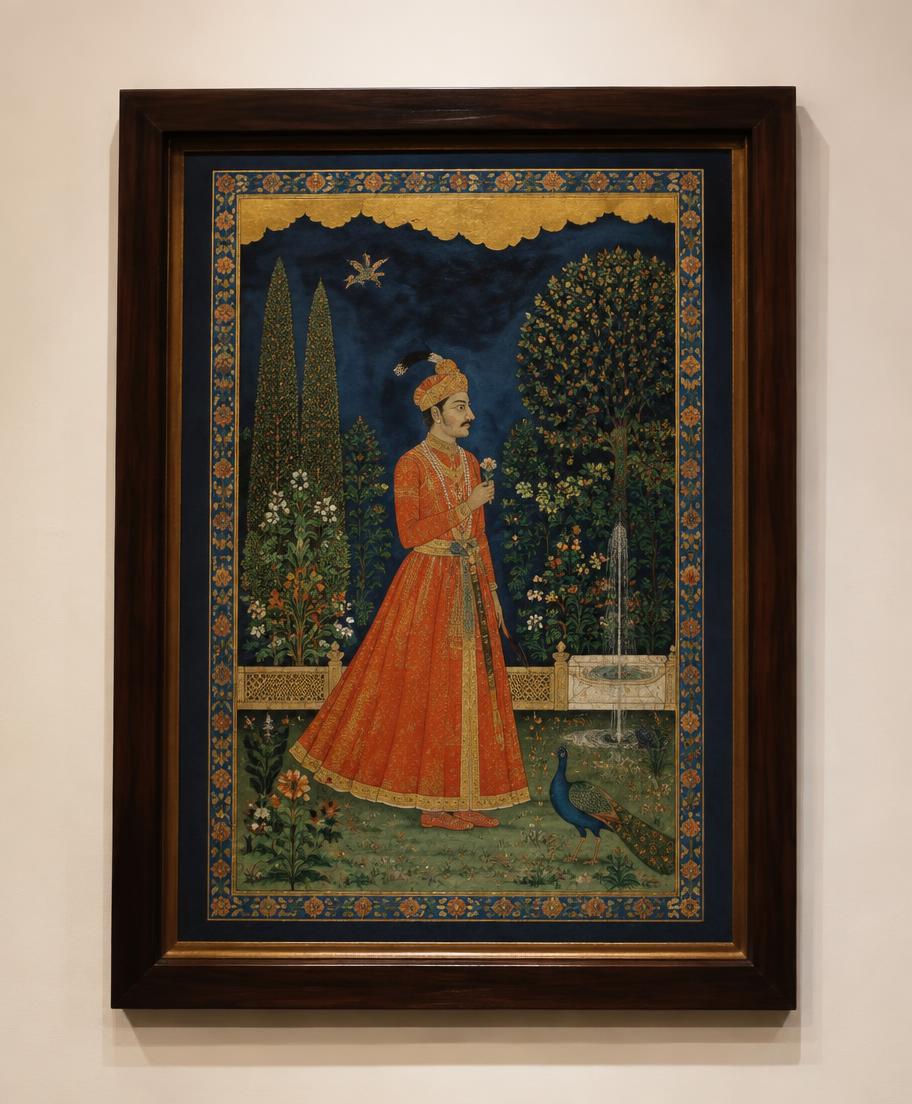
In the north, the Mughal and Rajput ateliers used gold differently: ground into a fine shell gold and applied with a brush, then burnished with an agate until it caught light like silk. Borders, halos, brocade and the flicker of a distant pavilion were all touched with the metal, never overwhelming the image, always elevating it.
“Gold asks the viewer to slow down. It changes as you move, and so the painting is never quite the same twice.”
A modern inheritance
Twentieth-century Indian artists inherited this vocabulary and made it their own. Gold returned in icon-like surfaces, in gilded sculpture, and in the lustrous grounds of contemporary painters seeking a spiritual register. In the gilded figures of artists such as Madan Lal, gold carries the same quiet devotion it once held in the shrine, now translated into a language of serenity and music.
Why it endures
For the collector, gold offers something rare: a material that is at once ancient and alive. It resists tarnish, holds its brilliance over centuries and, crucially, rewards close looking. A gilded work reveals itself slowly, morning light and evening light producing two different paintings.
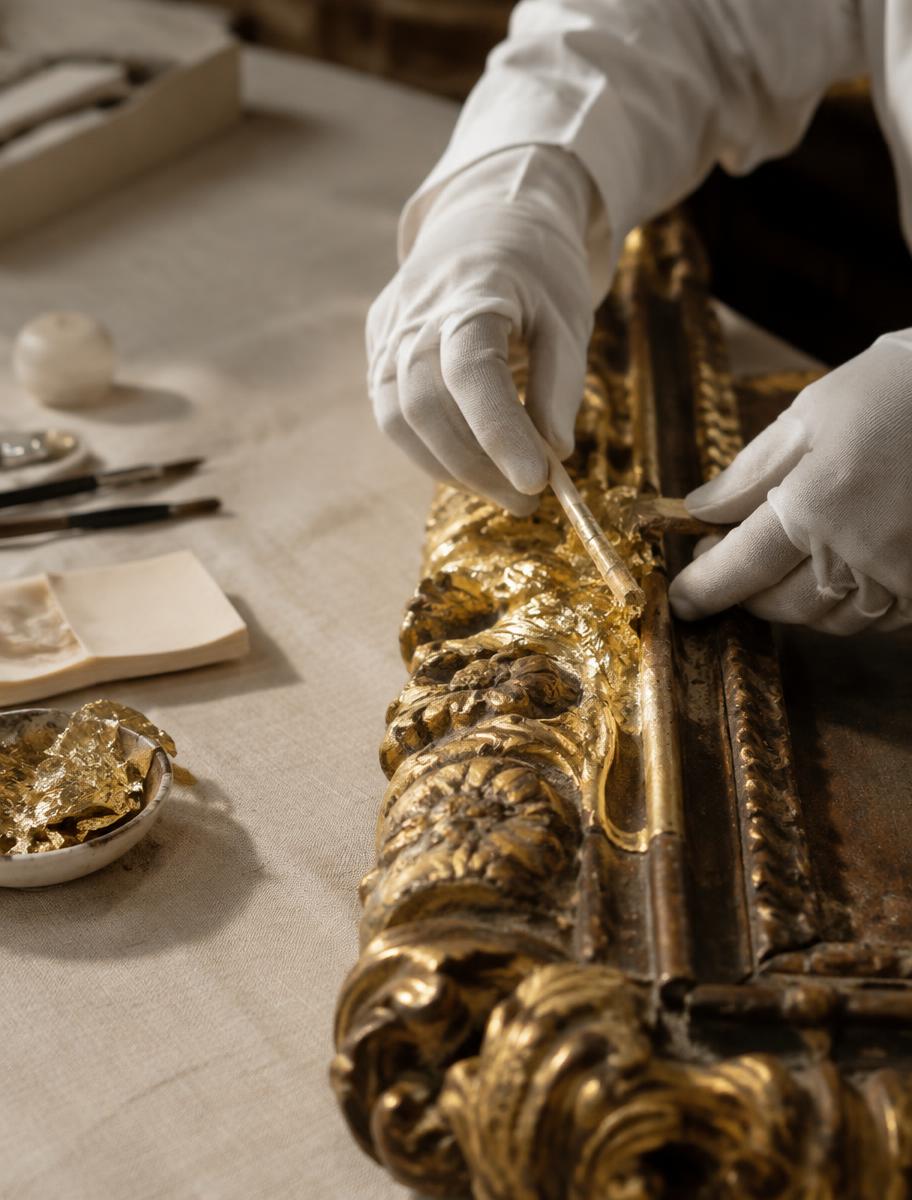
Caring for such works is simple but exacting: stable humidity, no direct sunlight, and never a damp cloth on a gilded surface. Treated with respect, gold will outlast every one of us, which is, perhaps, exactly the point.