We live surrounded by images that shout. Screens refresh, feeds scroll, and every surface competes for a moment of our attention. It is no surprise, then, that many collectors are drawn to work that does the opposite: paintings that hold still and wait for us.
The discipline of restraint
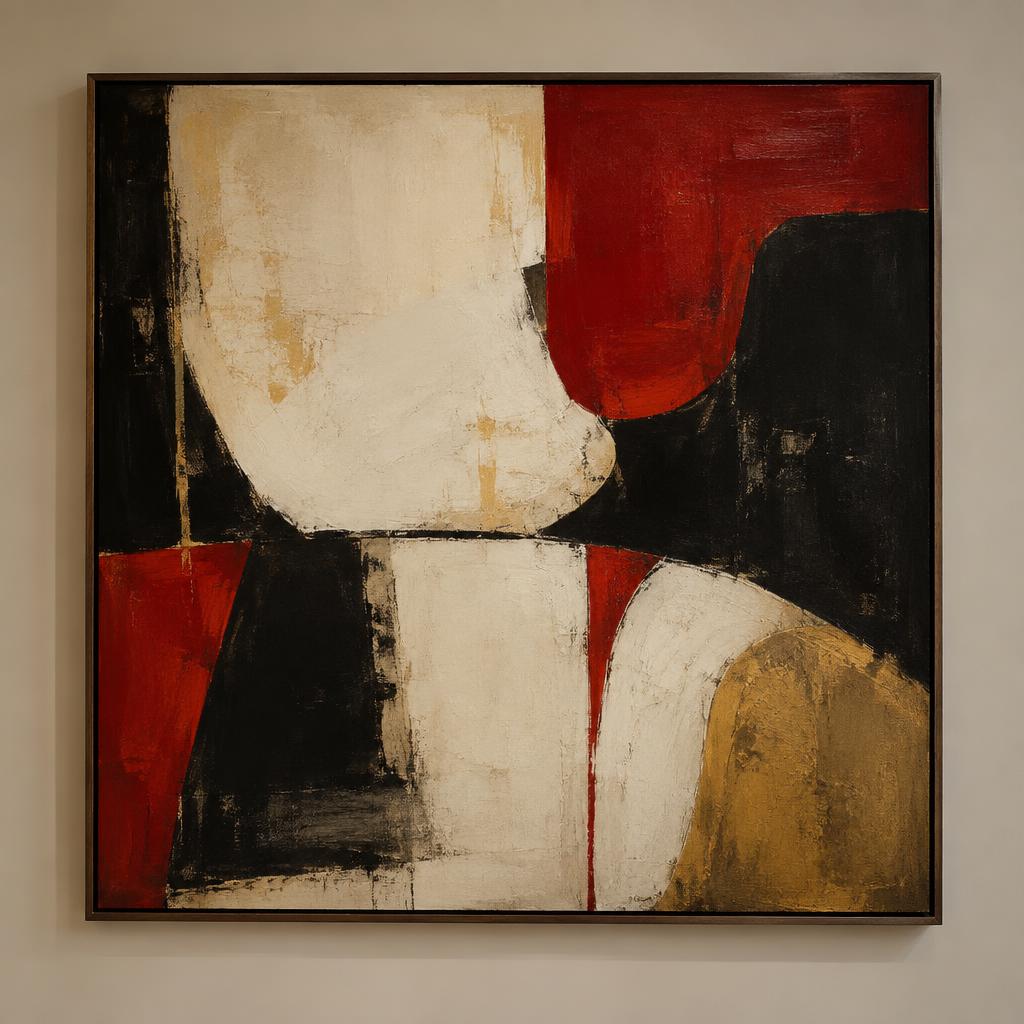
Restraint is often mistaken for simplicity. In truth, it is the harder path. A canvas with a single field of colour and one decisive edge must be exact in every decision: the temperature of the pigment, the weight of the line, the precise point where one tone meets another. There is nowhere to hide.
Indian abstraction has a long relationship with this discipline. Artists such as V.S. Gaitonde spoke of silence as the true subject of their work, building luminous surfaces layer by layer until the painting seemed to glow from within. That lineage continues today in painters who treat colour as architecture: walls, thresholds, shafts of light.
“A painting should hold silence, not fill it.”
Living with stillness
A quiet painting changes a room in ways that are difficult to describe but immediately felt. It slows the pace of the space. It gives the eye a place to rest. Placed with care, with generous wall space and soft, indirect light, such a work becomes less an object and more an atmosphere.
A note for collectors
Minimal work rewards patience in acquisition as well as in looking. Seek the artist's most resolved periods, study the surface in person where possible, and ask about the layering process. The best of these paintings reveal their depth only over years, which makes them among the most rewarding works to live with.