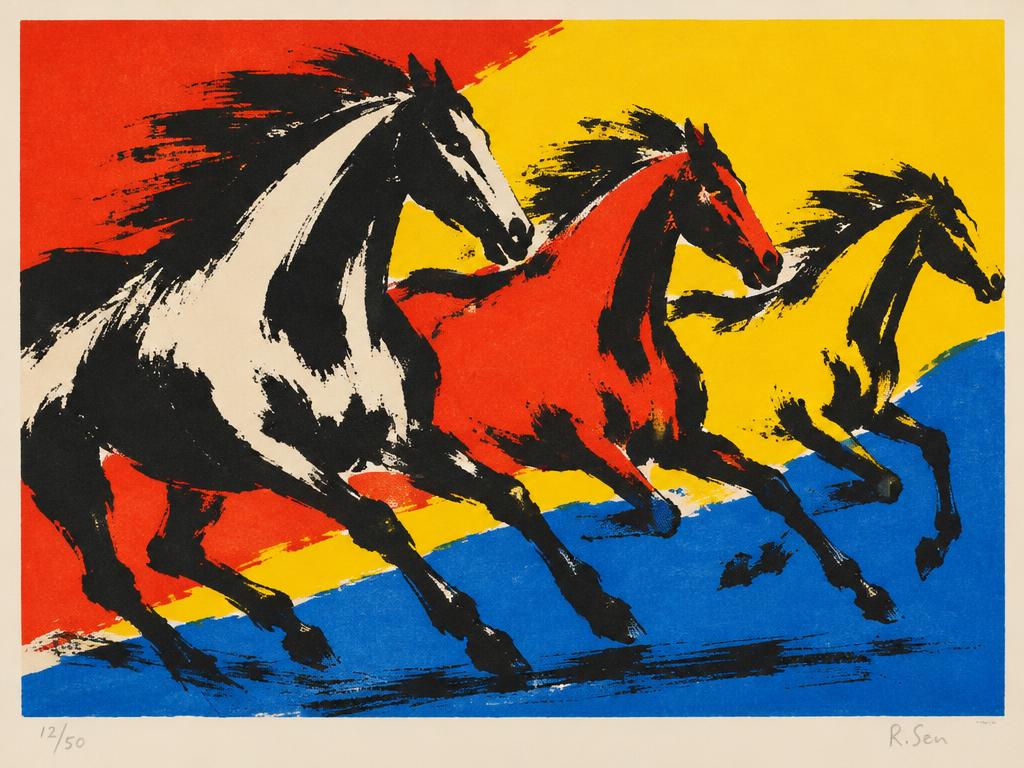
Few images in Indian art are as instantly recognisable as a Husain horse: head flung back, muscles drawn in a few furious strokes, hooves barely touching the ground. For more than half a century, the horse was Maqbool Fida Husain's most loyal subject.
Where the horses came from
Husain spoke of many sources. There were the horses he saw as a boy in the Muharram processions of his childhood, including the caparisoned horse that recalls Duldul, the steed of Imam Husain. There were the terracotta horses of rural India, the classical sculpture of Chinese Tang horses, and the energy of the cinema hoardings he painted as a young man in Bombay.
Out of these memories he forged a horse that belonged to no single tradition. It is part myth, part motion study, part pure energy of the line.
“The horse, for Husain, was not an animal but a force: freedom, power and movement made visible.”
A founding modernist
As a founding member of the Progressive Artists' Group in 1947, Husain helped shape a new, independent visual language for India. The horse became his signature because it could carry everything he wanted to say: the vigour of a new nation, the grandeur of the epics, the rhythm of everyday life.
Why the horses still run
Decades on, the horses retain their charge. They look spontaneous, yet they are built on a lifetime of drawing. That balance of freedom and mastery is why they continue to feel contemporary, and why they remain central to any serious collection of Indian modernism.
Collecting Husain today
For many collectors, limited-edition serigraphs published under the artist's supervision offer an accessible entry into the Husain canon. Look for hand signatures, clear edition numbering and documented publication history, and always acquire through a source that provides a certificate of authenticity.